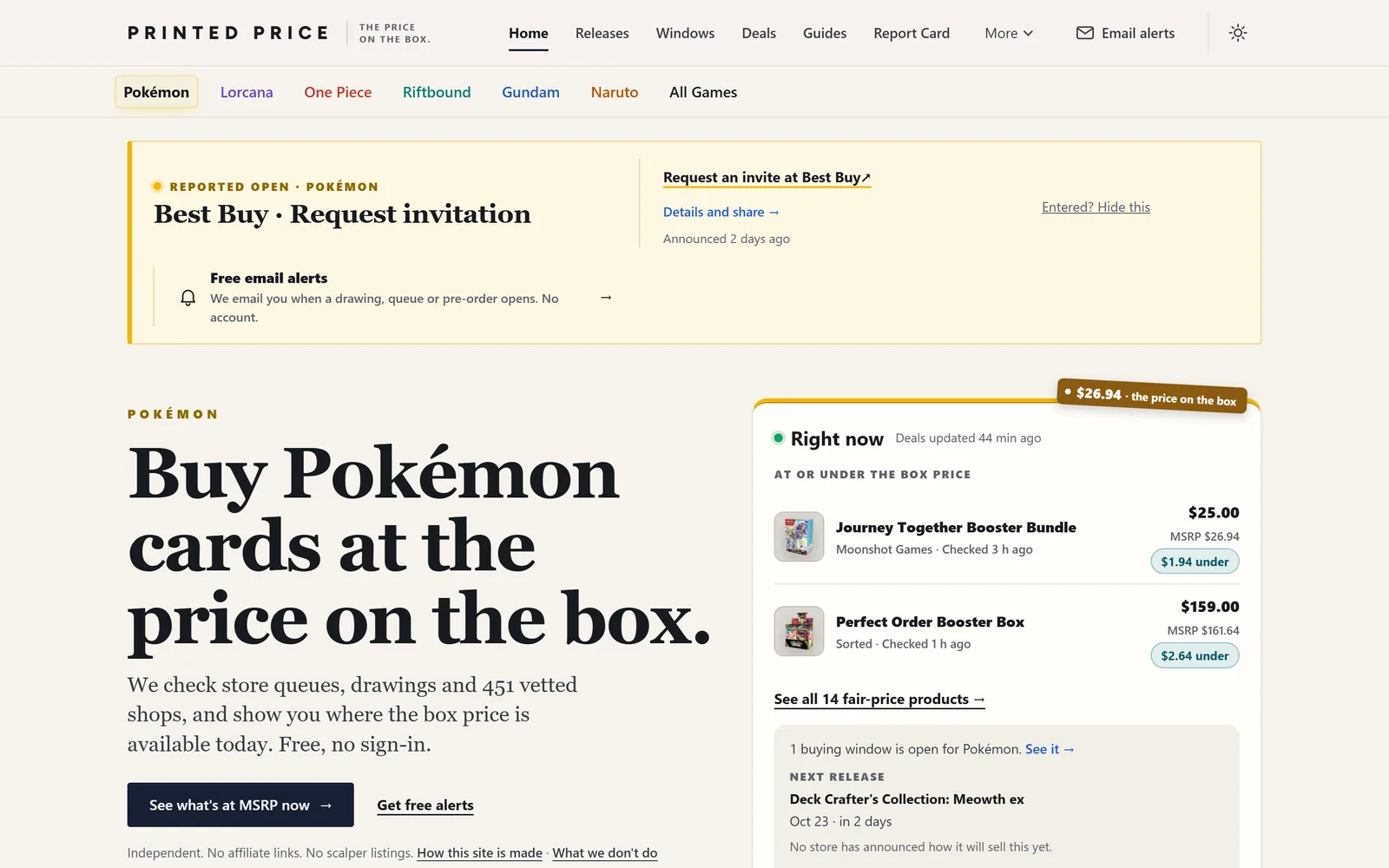
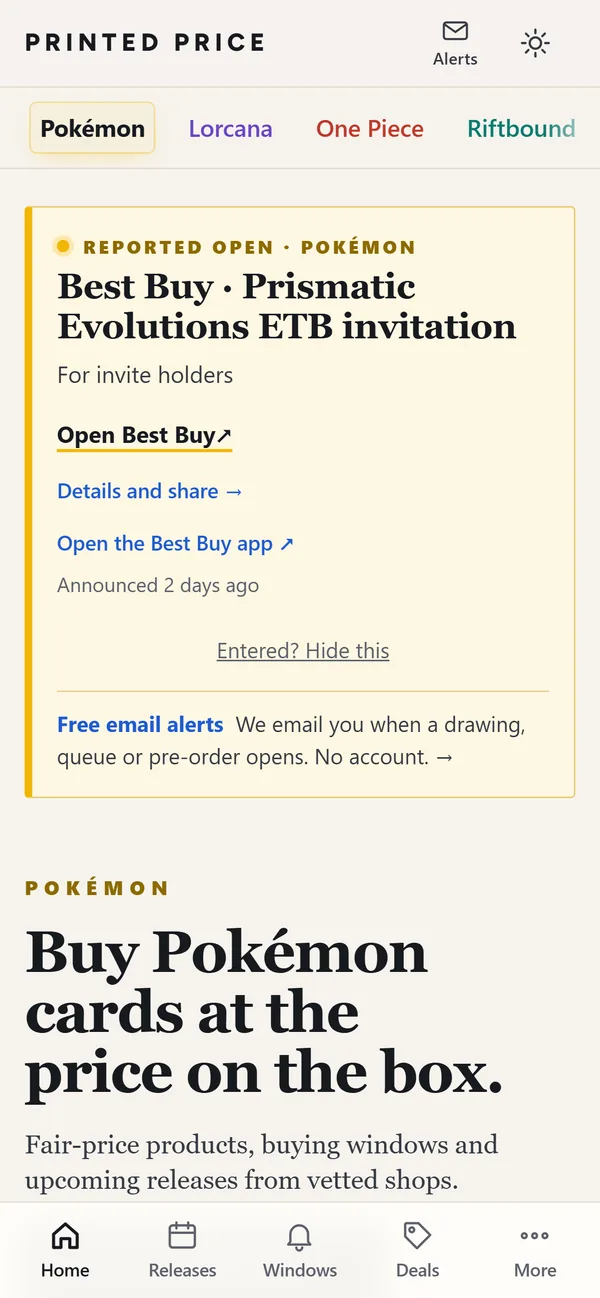
A full-stack, edge-hosted platform, designed, built and operated by Proxy IT, that helps collectors buy trading cards at the price printed on the box.
Sealed trading-card products routinely sell for far above their suggested retail price. Bots sweep inventory the moment it drops, and the information about which stores sell at MSRP, and when and how to get in line, lived behind paid Discord servers.
Collectors needed one trustworthy, independent place to answer three questions: what is a fair price right now, what can I buy now, and what is coming?
From raw retailer signals to a clear answer in seconds, without making anyone create an account.
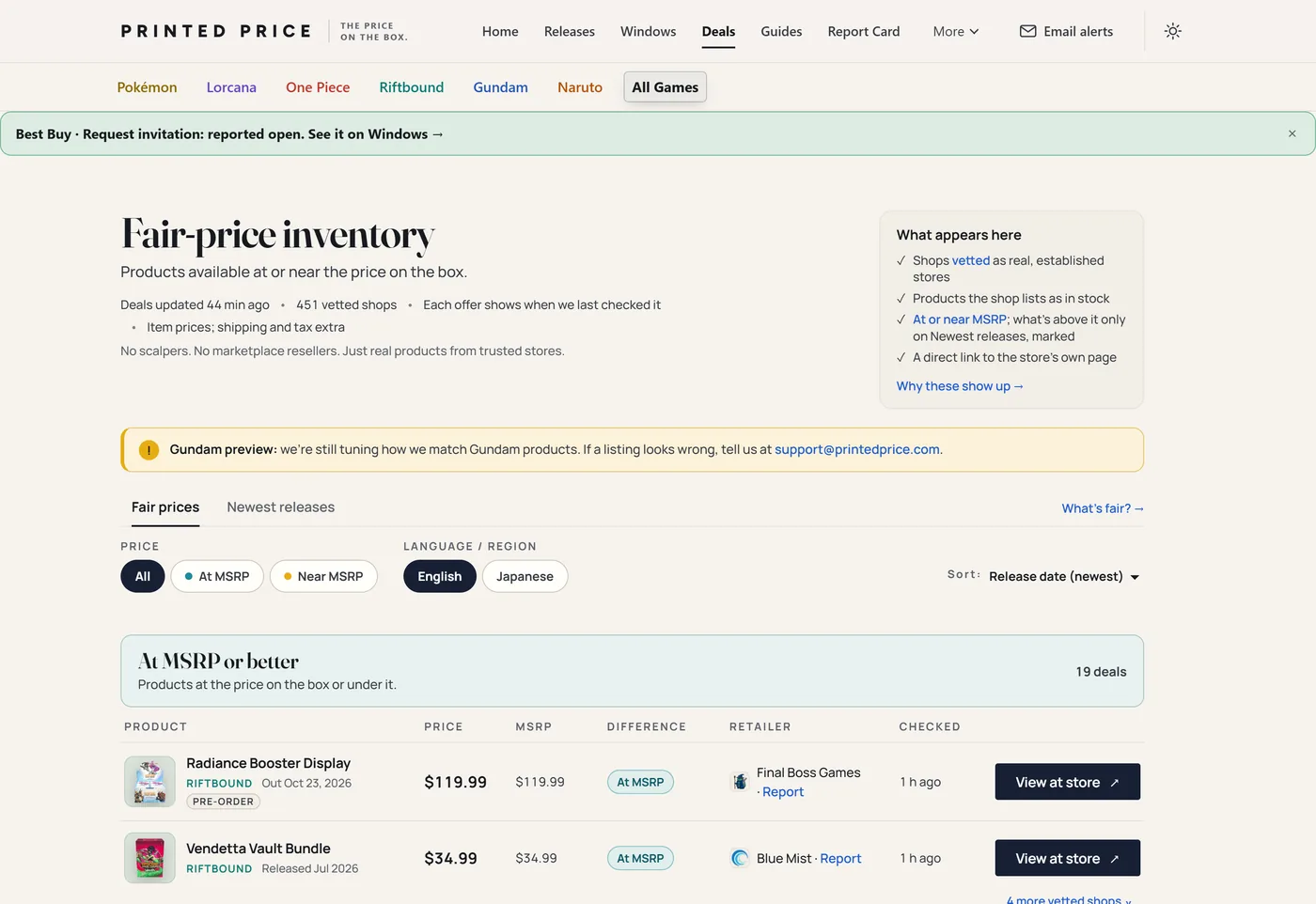
A live view of products at or under the box price, surfacing vetted shops and filtering out scalper listings.
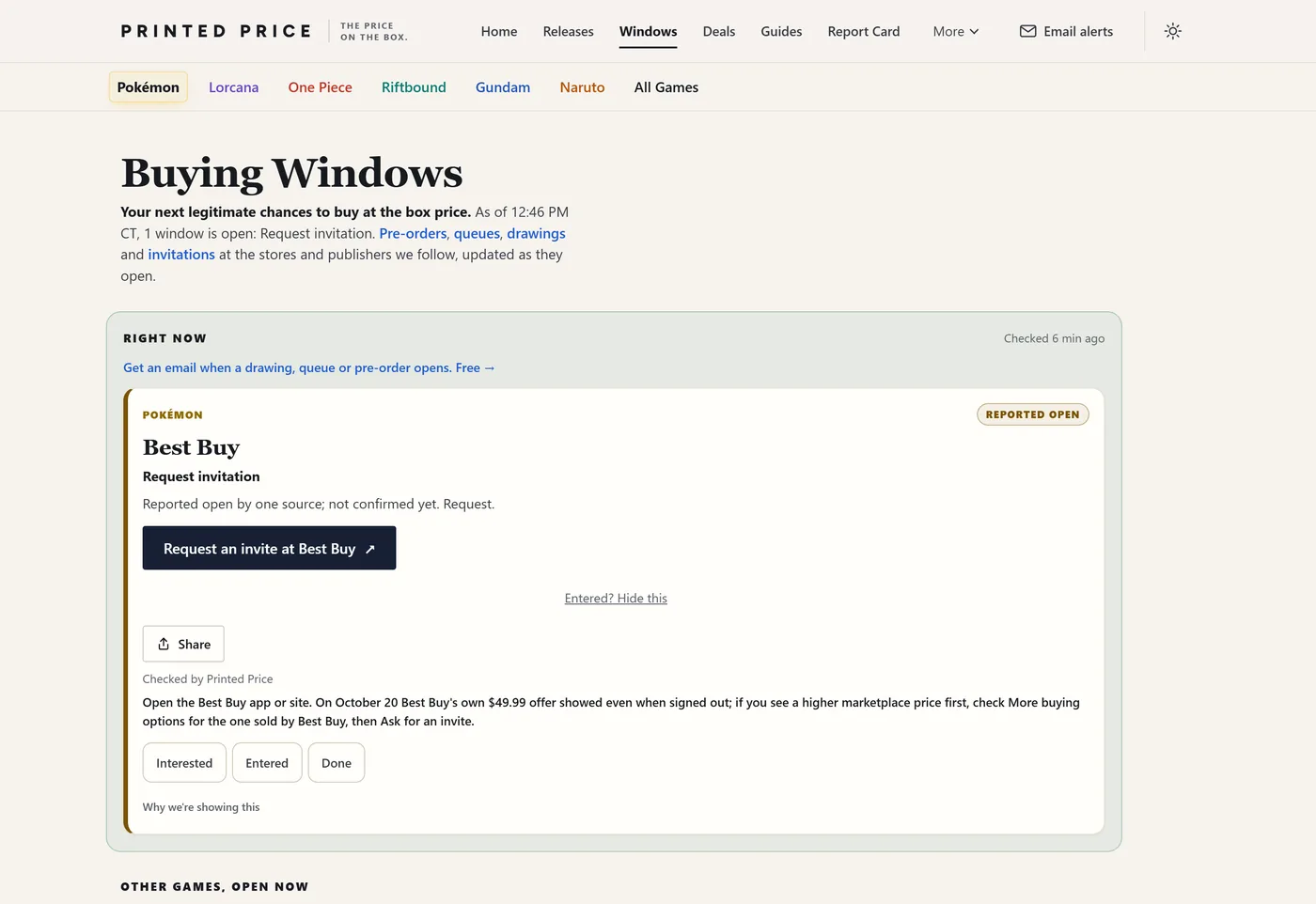
Queues, drawings, lotteries and pre-orders consolidated into one timeline of live and upcoming opportunities across retailers.
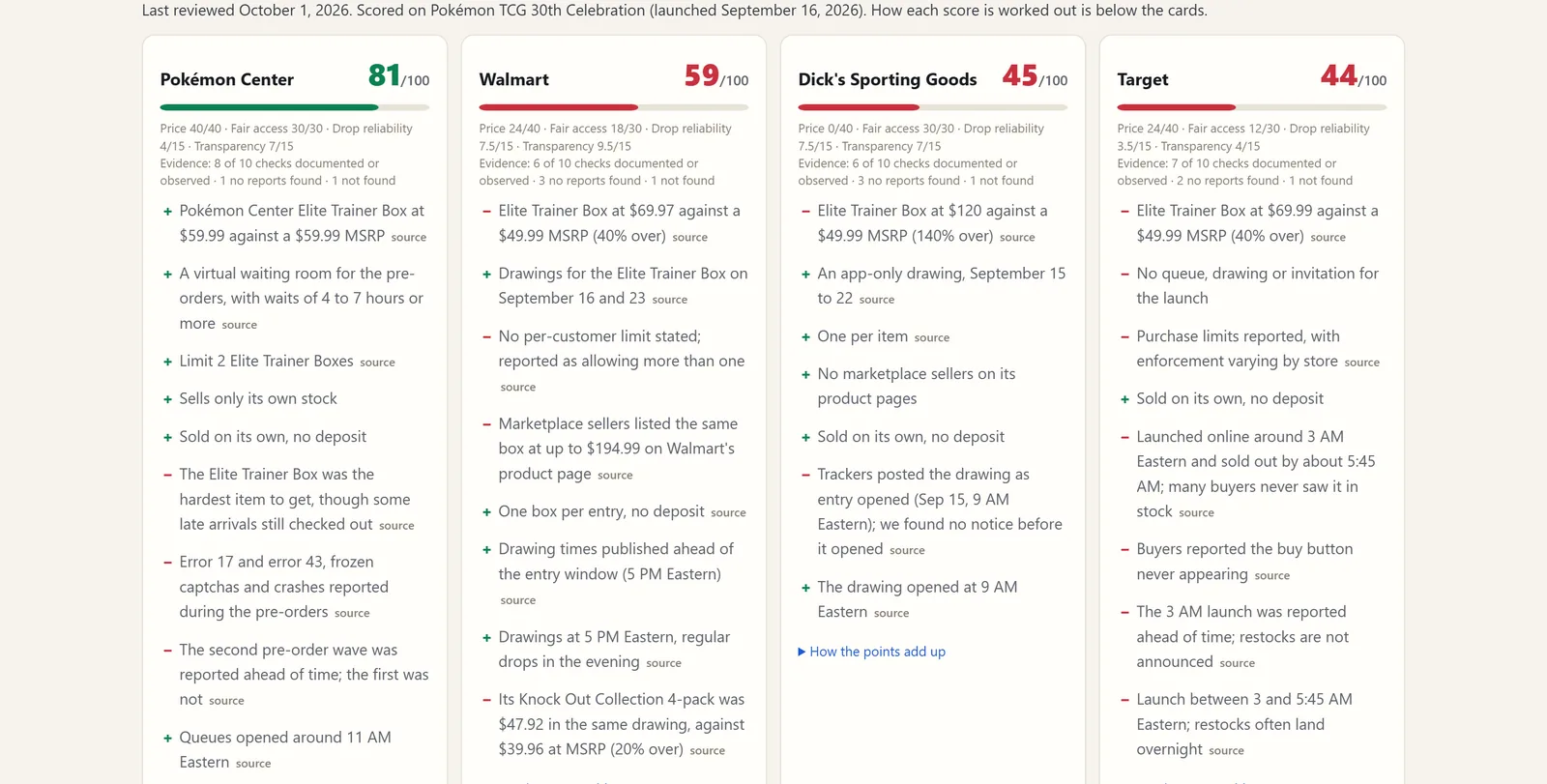
Every major retailer scored on a published formula, re-scored after each big release, with the evidence behind each point.
Upcoming launches with MSRP, pre-order status and the shops selling at fair prices, per game and per set.
Double opt-in email alerts the moment a queue, drawing or pre-order opens, with delivery tracking and automatic bounce suppression.
Shopping playbooks for specific stores and products, plus a searchable glossary linked inline from the guides.
The store report card is a 100-point model with published weights. Pricing is scored against MSRP directly: at or under earns full marks, and every percent over costs points.
Evidence is tiered, so a documented policy and an absence of reports are never treated the same. Methodology is evaluated per game, and stores are re-scored after every big release.
One Cloudflare Worker renders every page, serves the public APIs, runs the scheduled jobs and handles webhooks. It is about a hundred first-party modules with no third-party runtime libraries.
Cloudflare Workers render pages on request and run the scheduled jobs, with isolated production and dev environments.
Cloudflare D1 (SQL) stores shops, listings and an append-only event history. A separate alerts database keeps subscriber and consent data isolated.
R2 object storage holds regular, checksummed backups and long-term history archives.
KV and the edge cache hold computed results, so pages stay fast while data refreshes behind them.
A dedicated reader service checks each shop's public catalog on a regular schedule, identifying itself honestly and pacing its requests to respect every store.
Product names are converted to canonical names, and singles, lots, graded items and pickup-only listings are filtered out before anything is priced.
Each listing is matched to its MSRP. Prices that look too good to be true are cross-checked before anyone sees them.
Every read is compared with the last one. Restocks, sell-outs and price changes become events in an append-only history.
Subscribers get a one-time, idempotent alert per event and channel. Email is double opt-in, unsubscribing takes one click, and bounces and complaints are suppressed automatically.
New shops are vetted before they go live, and unusual pricing is flagged for review automatically.
Report-card points carry their source, and buying windows need corroboration before they reach anyone's inbox.
Built-in health checks catch data gaps and stale feeds, and confirm when they recover. Metrics flow to Grafana for observability.
Hardened security headers, verified third-party callbacks and least-privilege access for every internal service.
No accounts and no cookies. Usage counts are aggregate only, and consent is recorded with a version and method for every subscriber.
New data sources and features are trialled alongside live ones, so changes are proven before they reach users.
PrintedPrice is our own product, held to the standard we set for client work.
Turning a fuzzy market problem into a focused product roadmap and a sustainable operating model.
Reliable ingestion, normalisation and history, so decisions rest on data you can trust and trace.
Edge-hosted architecture with environment separation, caching and backups built in from day one.
Consent tracking, suppression handling and minimal data collection as defaults, not afterthoughts.
Whether it's a new product, a data pipeline or a move to the edge, let's talk it through. No pitch, just a conversation.